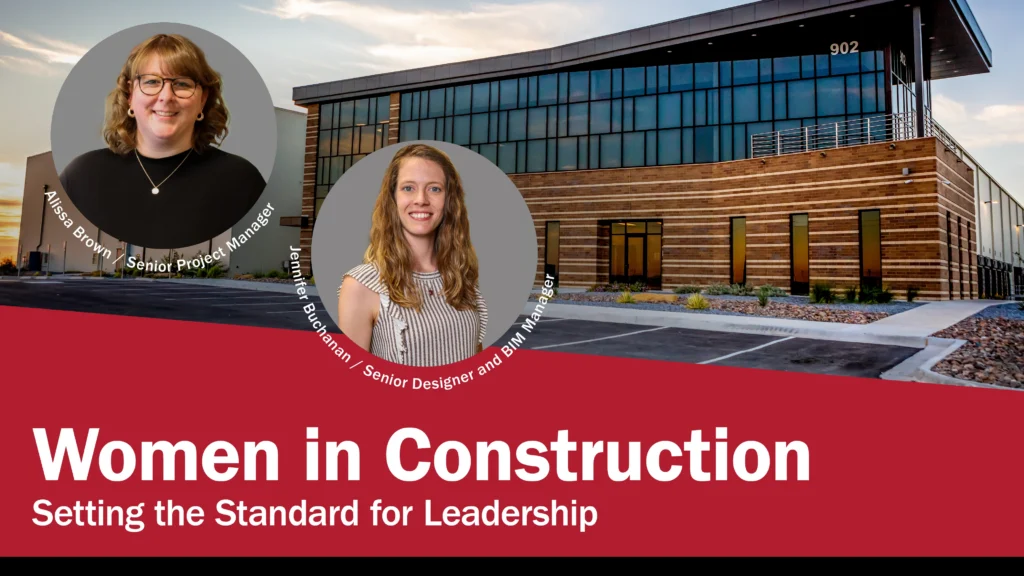


Women in Construction: Setting the Standard for Leadership
Women in Construction Week is often framed around representation. That matters — but representation alone doesn’t build trust, manage risk, or deliver exceptional facilities.
At A M King, women lead complex food processing, food distribution and industrial manufacturing projects every day, consistently and repeatedly bringing value to our clients. This Q&A highlights two of our leaders — Alissa Brown, Senior Project Manager, and Jennifer Buchanan, Senior Designer and BIM Manager, each with more than eight years at the company. Their work reflects how our firm defines leadership: through action, follow-through, and results.
Women Leaders In Construction
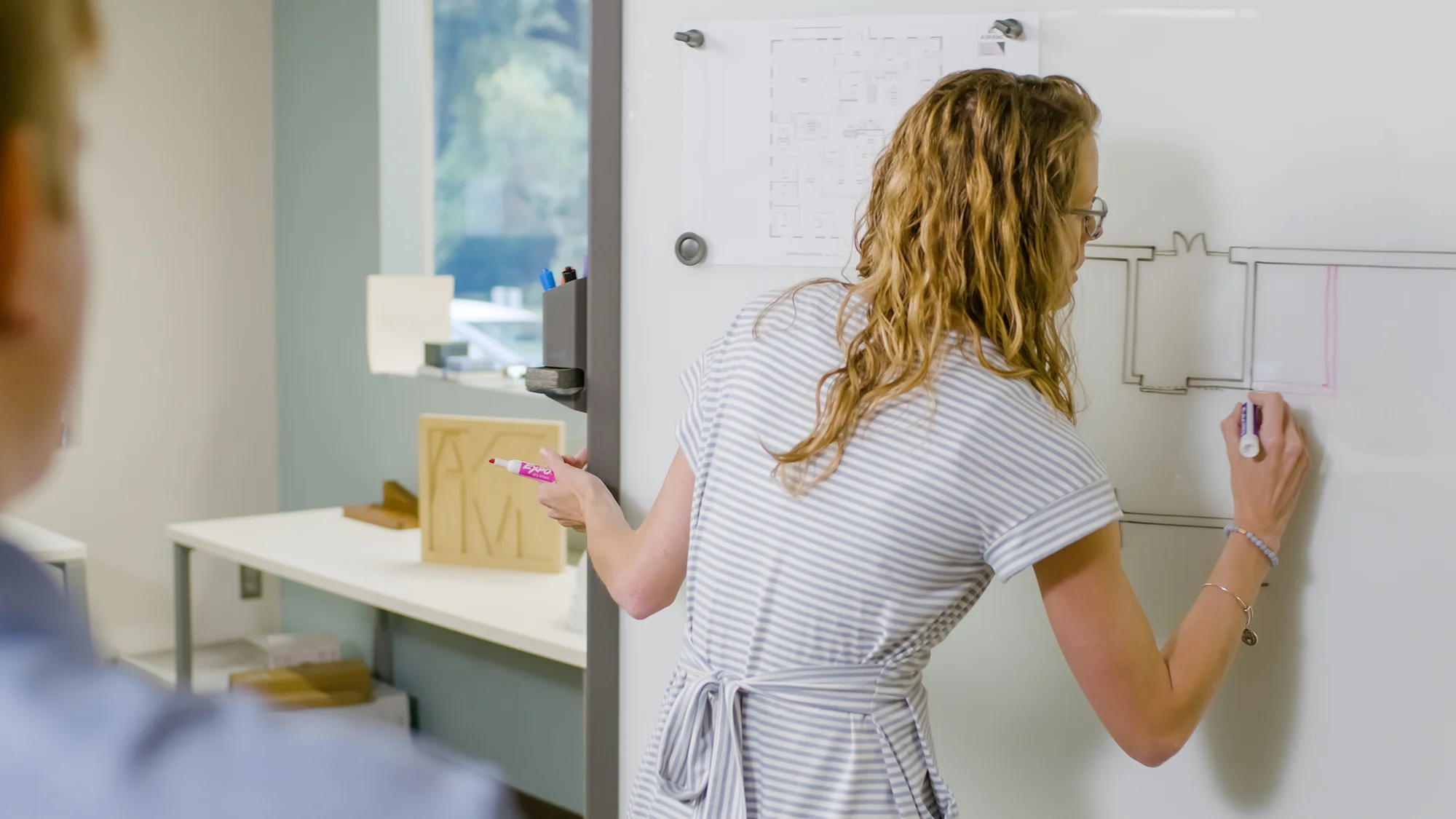
Industry research continues to show that women in construction leadership face barriers to advancement and influence, from exclusion in decision-making to unclear promotion pathways. According to Building Better: Rethinking Leadership in Construction, a 2025 report by the National Center for Construction Education and Research (NCCER) and Ambition Theory:
- 75 percent of women in construction have had their judgement questioned in their area of expertise
- 70 percent have been mistaken for someone in a more junior position
- 68 percent say poor leadership is driving them out
In the weeks leading up to Women in Construction Week, social media across architecture, engineering and construction reflected similar themes — from lighthearted “POV” reels about jobsite assumptions to candid commentary about who gets a seat at the table. The humor resonates because the scenarios are familiar: a woman asked to clarify a drawing she authored or is mistaken for someone other than the project lead.
We agree that women’s potential in this industry is largely untapped. Rather than focusing on what’s difficult about working in construction, what follows is a conversation focusing on leadership in practice — how two of our design and construction professionals earn trust, establish authority, enforce safety, inspire their teams, and positively impact the projects they are so passionate about.
A Conversation with Alissa Brown & Jennifer Buchanan
When you walk into a client meeting, what tells people you know what you’re doing — before you even say anything?
Alissa: Preparation shows before credentials ever do. Knowing the project, recognizing potential issues, and understanding the priorities of the people in the room go a long way. Confidence and competency don’t have to be loud to be seen.
Jennifer: Planning. I’m always over-prepared, especially when I’m leading a discussion. That preparation shows up in the materials I share ahead of time. It allows me to anticipate questions, guide the conversation, and speak with confidence.
Have you ever had your expertise underestimated — and how did you handle it without letting the project suffer?
Alissa: Absolutely. Most people don’t do it intentionally or maliciously, but it does happen. I’ve learned that correcting assumptions doesn’t always require confrontation. Often people need to see their assumptions challenged before they change them, so I let my work speak for itself. The goal isn’t to prove someone wrong — it’s to keep the project moving forward successfully.
Jennifer: Yes, subtly, but often. Early in my career, I became aware of unintentional bias rooted in stereotypes rather than experience. I’ve learned that the most effective response also serves the project best: do the work well, and do it consistently. Assumed weaknesses can become strengths when you demonstrate skill, follow-through, and sound judgment.
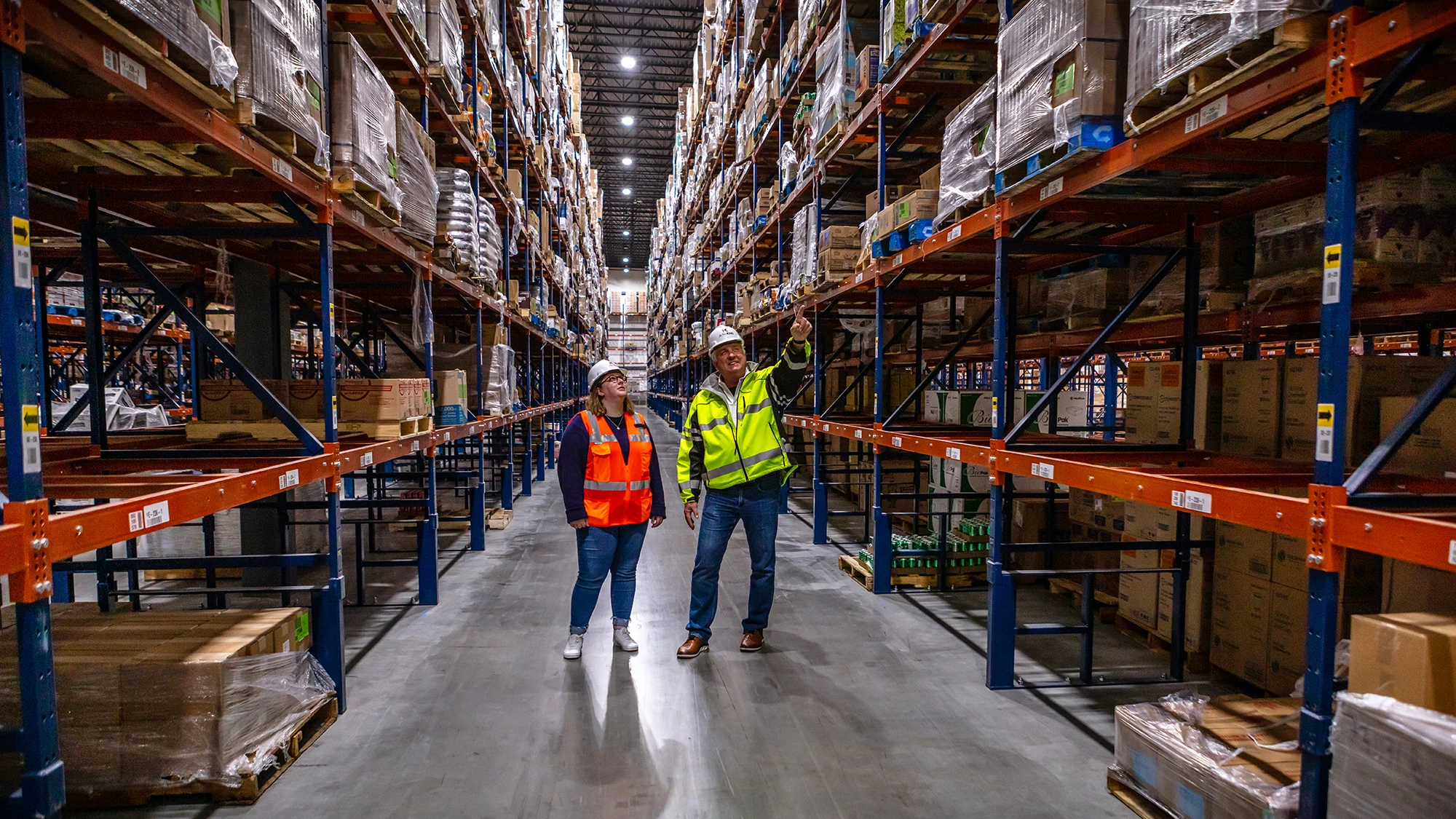
How do facility owners benefit when women are in visible leadership roles?
Alissa: We can bring a different perspective and approach to projects. We not only bring our technical expertise, but women in construction leadership also often bring strong communication and collaboration, attention to detail, risk awareness, and long-term thinking to the table. Owners benefit from leaders who focus not just on building the project, but also how it will continue to serve the facility and the people who work there for years to come.
Jennifer: Owners benefit from teams that challenge assumptions and continuously improve. People approach problems differently, and that diversity of thought leads to better outcomes. We must work together to support and question each other, and keep finding ways to design and build better.
Women in visible leadership roles often signal a culture that values collaboration, accountability, and openness to change — qualities that directly support stronger project results.
Can you share a moment when your leadership changed the direction or outcome of a project?
Alissa: Rather than a single moment, my leadership has had the greatest impact through consistent, open communication. I work hard to make sure my team feels safe coming to me with questions, issues, or mistakes. That openness allows us to address problems early — before they begin to affect the project — which ultimately improves outcomes across the board.
Jennifer: Design impact rarely comes from a single moment. It’s the accumulation of many deliberate decisions made over time. My influence shows up through consistent attention to detail, following tasks through to completion, and staying engaged through every phase of the project. That continuity helps prevent small issues from becoming big ones — and that’s often where the real value is.
When you’ve seen great people — especially emerging leaders — leave the industry, what was missing, and how do you try to prevent that on your team?
Alissa: What’s often missing is support. Construction can be fast-paced and demanding, but when people feel unheard or unsupported, they burn out. This industry often has a “sink or swim” mentality when it comes to learning, so I try to act as a lifeguard for my team — constantly scanning to make sure people’s heads are above water and stepping in before someone starts drowning. That means listening, mentoring, and creating space for learning and growth instead of expecting that everyone can just “figure it out.” When people feel seen and backed, they stay.
Jennifer: Burnout matters but feeling undervalued matters more. When people don’t feel recognized or heard, they’re more likely to leave — even after investing years toward leadership. On my team, I make a point to acknowledge effort, give positive feedback, respect differing perspectives, and recognize individual strengths. I also hold myself to the same standards I expect of others. I never want anyone to feel interchangeable or invisible.
Concluding Remarks
Strong leadership in construction isn’t about having all the answers or being the loudest voice in the room. It’s about accountability, consistency, and trust. Great leaders bring experience, confidence, honesty and composure to every project. They can admit when they don’t know something, ask the right questions, and do the work to learn. They show up prepared, are true to their word, and speak up when something doesn’t feel right.
At A M King, leadership also means balancing high standards with taking care of people. Long-term success doesn’t come only from delivering successful projects, but from building strong teams that want to stay. We strive to hire individuals with integrity and a strong work ethic and then give them opportunities to gain experience.
When leaders focus on learning, supporting others, and doing what’s right for the project, the results follow — for clients, teams, and the business as a whole.

 Alissa Brown, Senior Project Manager, joined A M King as a Project Engineer in 2018 after graduating from Clemson University. She specializes in work for companies in the food processing and food distribution industries with an emphasis on meat and seafood processing and cold storage. She is an advocate for women in construction — participating in the NAWIC Leadership Academy and as one of the founders of A M King’s Women in Construction group.
 Jennifer Buchanan, DBIA, ACP, is Senior Designer and BIM Manager, fulfilling the role of project coordinator on manufacturing and food industry projects. A graduate of UNC Charlotte, she has an educational background in both Architectural Technology and Civil Engineering. Jennifer has more than 10 years of experience in BIM technologies and holds a certificate from Commercial Food Sanitation. She enjoys learning about technological innovations that can improve the outcome of the complex projects for which A M King is known.