
The Benefits of Digital Twins Technology for Manufacturers
Several years ago, a manufacturing client in South Carolina asked my team to help revitalize what they called their ‘as-built, 3D model.’ Previously, the client had paid for a scan that was used to generate a 3D model of the existing building and all equipment. Little did they know, they had taken the first step towards creating a digital twin.
Because data links weren’t established between the virtual model and their associated physical assets, the model quickly became obsolete. As the company’s Design-Build partner, our first task was to update the model to reflect current conditions. That was followed by conversations with senior management about what data to capture going forward and what software to use to process that data. We recommended a number of approaches for establishing a data link between the physical and the virtual, and embedded workflows within the existing project processes.
Then there was a plan in place for creating a viable digital twin that could fuel better decisions about operations, maintenance and future projects.
What is Digital Twins Technology?
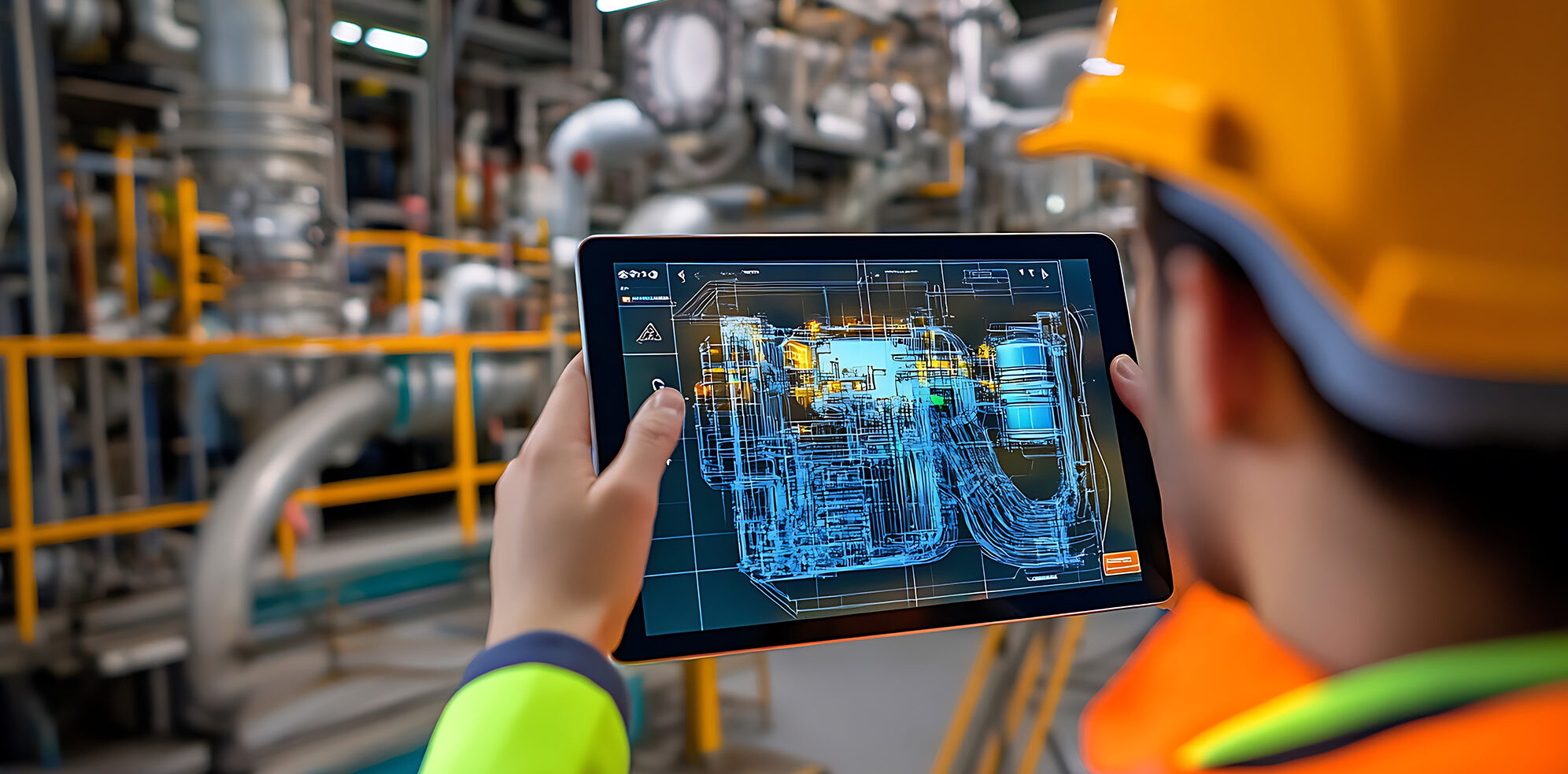
Many facility owners are now accustomed to visualizing their buildings during design and construction with Building Information Modeling (BIM). Though it’s a powerful tool, BIM has limited usefulness once a building is complete unless it advances into a digital twin. Successfully managing this transition is a complex endeavor. It requires technical expertise from all parties involved, clear goals, and a thorough understanding of the facility and processes within it.
A digital twin is comprised of 1) a virtual representation of a physical entity or system and 2) real-time data collected from that physical asset.
In some cases, the data link can be bi-directional, meaning the digital twin can control or manipulate the physical asset.
The roots of digital twins can be traced back to the early days of computer-aided design (CAD) and simulation, well before the advent of Industry 4.0. The earliest digital models were developed in the aerospace and automotive industries in the 1970s and 1980s and were primarily used for simulations. But Dr. Michael Grieves is credited with first introducing the concept of digital twins in 2002. Initially, it was a theoretical framework, but technological advancements over the past two decades have transformed it into a practical, game-changing instrument for an industry that is under intense pressure to meet customer demands.
Today digital twins are swiftly becoming mainstream. According to Fortune Business Insights’ 2025 report, the global digital twin market size was valued at USD 17.73 billion in 2024. The market is projected to grow from USD 24.48 billion in 2025 to USD 259.32 billion by 2032, exhibiting a CAGR of 40.1% during the forecast period. The manufacturing segment is anticipated to grow at the highest CAGR during the forecast period.
As design builders, our focus has always been on the performance of a building and its systems, while still prioritizing the client’s processes within.
Because we are already focused on process, we are positioned to recognize points of value for a potential digital twin. The content of a digital twin should be tailored to include elements that represent critical assets to client operations. In addition to building infrastructure, a digital twin may include mechanical systems, electrical equipment, security devices, processing and manufacturing equipment, materials, products, conveying systems, racking systems and even people.
From design to construction, then to facility maintenance and CapEx programs, A M King can provide the information management necessary for successful client growth.’
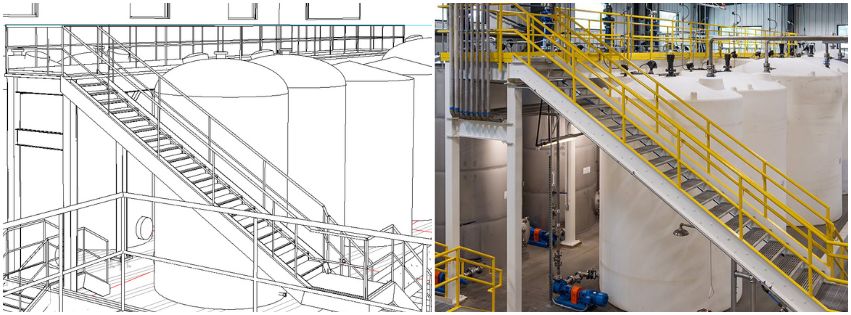
The digital representation portion of a digital twin can begin with BIM. Alternatively, for buildings not designed in BIM and existing buildings, we can utilize reality capture methods to create digital representations. This was the case for our South Carolina client.
Read on for details about digital twins for manufacturers, why the technology has become so invaluable in this sector, and how it works.
Digital Twins Applications
A digital twin is a very open-ended concept and can be completely customized to fulfill almost any need —- from simply monitoring and providing a descriptive data output, to simulating “what-if” conditions, to controlling the real-world physical entity. Digital twins technology for manufacturers generally fall into a few distinct categories, including process twins, product/asset twins and factory twins. While it’s important to know the variety of uses for digital twins, we focus on applications that will benefit our niche markets.
Process twins allow owners to analyze how parts of the process are performing, visualize how separate processes impact each other, and determine methods for optimizing the process as a whole and making it more efficient. This type of twin can help reduce the number of defective batches, optimize electricity and water consumption and enhance safety. By using digital twins to track and analyze how people interact with the industrial processes, management can even find ways to mitigate risk to employees.
Asset/product twins model entire products or assets, like machines or vehicles.
The automotive and aerospace industries, for example, can use this type of twin to enhance product quality (i.e. testing vehicle or aircraft designs) without building a physical prototype.
The twin can also be integrated with vehicle sensor data, allowing diverse teams to collaborate on aerodynamics, power and engineering.
Some manufacturers may set up a digital twin to continuously monitor the climate conditions within specific areas of a facility. With this capability, facility managers can verify that materials are being stored and used at the proper temperatures, and that product integrity is always protected. If it is found that conditions are not ideal, users can manipulate the physical system through the twin. Using this technology, facility managers and executives would remain informed and can take action as needed.
Factory digital twins provide a comprehensive model of the factory floor. Factory digital twins can model a manufacturing facility’s physical layout, machinery, workflows, energy systems, robots, forklifts and people. It may become evident that if certain raw materials or robots were positioned closer to a specific machine, for instance, production time could be substantially reduced. By analyzing historical data and performance patterns, digital twins can also predict potential problems before they occur, enabling proactive maintenance.
Advantages of Digital Twins Technology for Manufacturers
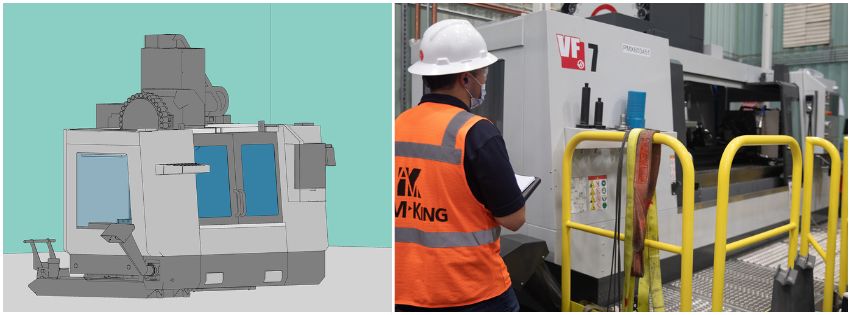
Asset twins, process twins, and other types of twins can stand alone or be embedded within a larger building twin depending on specific client goals. Each type of twin is intended to help manufacturers design, operate and maintain assets better, faster and cheaper. Here are some of the key advantages that digital twins bring to the factory floor, all without any disruption to operations:
- Improved operational efficiency. By simulating different process or system scenarios, digital twins can enable better planning and execution, leading to increased productivity and lower costs.
- Enhanced product quality. With product digital twins, new concepts can be tested before physical prototypes are made, resulting in better products and reduced waste.
- Predictive Maintenance. Using collected data, digital twins can predict equipment failures before they occur, thereby minimizing downtime, improving performance and extending asset lifespan.
- Speed to Market. By virtually testing and refining products and processes, manufacturers can launch products faster. Conversations with senior R&D leaders show that digital twins have cut development times by up to 50 percent for some users, according to McKinsey & Company.
- Customization and personalization. Manufacturers can use digital twins to match individual client requirements without sacrificing efficiency or cost.
- Supply chain optimization. Digital twins can be used to monitor inventory levels, improve logistics and enhance coordination among supply chain partners, enabling companies to react more quickly to market demands.
- Sophisticated monitoring. Many manufacturers produce goods in climate-controlled facilities, which must be routinely supervised and controlled for optimal quality. Digital twins can enhance this effort.
Final Thoughts
A M King is in a unique position to help our clients leverage digital twins. We already utilize BIM during design and construction of our clients’ facilities, many of whom could greatly benefit from incorporating this next logical step. In fact, according to Autodesk, “BIM is the most efficient path to the creation of an accurate high-value digital twin.”
When it is known during design that a client has interest in a digital twin, we can prepare the design authoring model to transform into a digital twin. Owners who understand the usefulness of digital twins become excited about the possibilities and enjoy defining goals with us.
A digital twin can enhance users’ experience with data they are accustomed to monitoring and tracking by providing a more intelligent output, holistic content, and improved visualization.
For example, O and M manuals, traditionally stored in binders in a maintenance area, can be integrated into a digital twin and used to generate maintenance schedules.
Processing and manufacturing facilities are a significant investment and thus receive continual enhancement as the business matures. Once a digital twin is developed and the technology understood, many users begin searching for additional functions to improve operations and maintenance objectives. This is how a digital twin can continue to evolve, bringing value to current operations as well as helping plan for future renovations, expansions and new facilities.