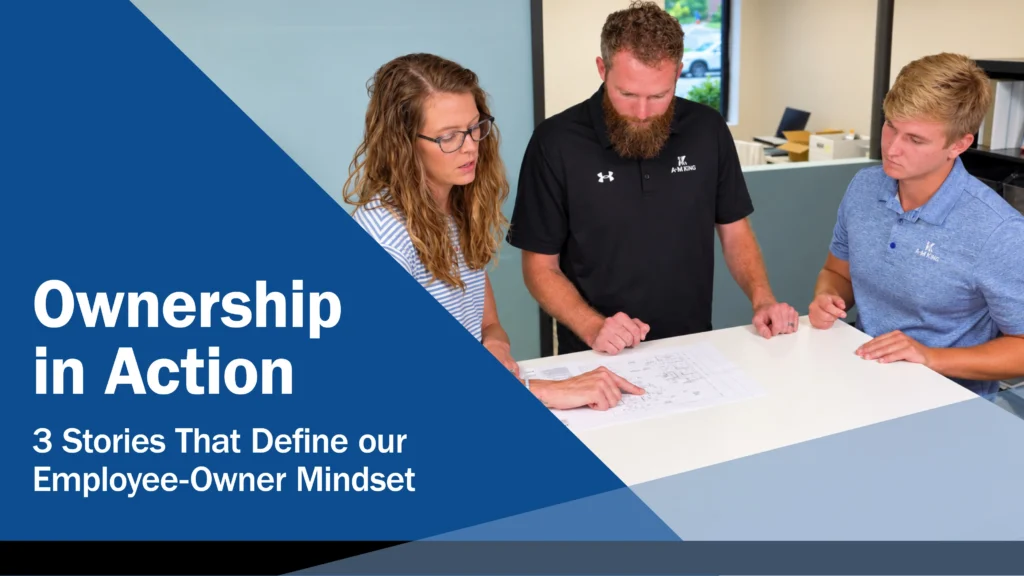

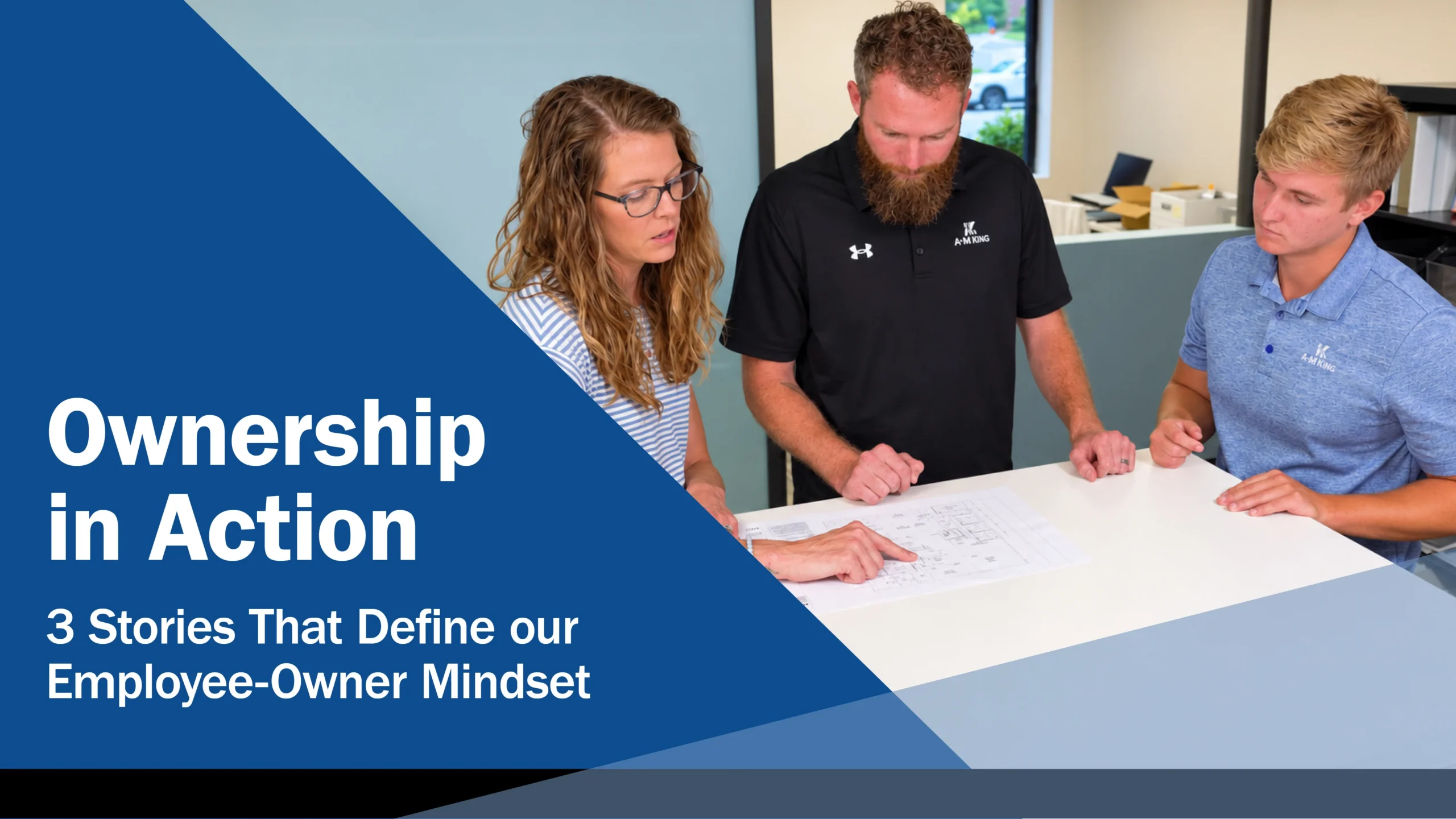
Ownership in Action: 3 Stories That Define Our Employee-Owner Mindset
Every project has a moment when the obvious answer isn’t the optimal one.
Maybe it’s a design decision that needs another round of collaboration. A construction challenge that demands an innovative solution. Or a conversation with a client that inspires you to do what’s best for the relationship by going beyond what’s expected.
If you’re a fly on the wall in our world, you might think these are routine scenarios, and they are, but if you listen closely, you’ll notice how they reveal our employee-owner mindset.
At A M King, employee ownership is more than a business structure. As an employee-owned Design-Build firm serving the food and industrial markets, we’ve seen how ownership shapes the way our teams collaborate, solve problems and deliver value.
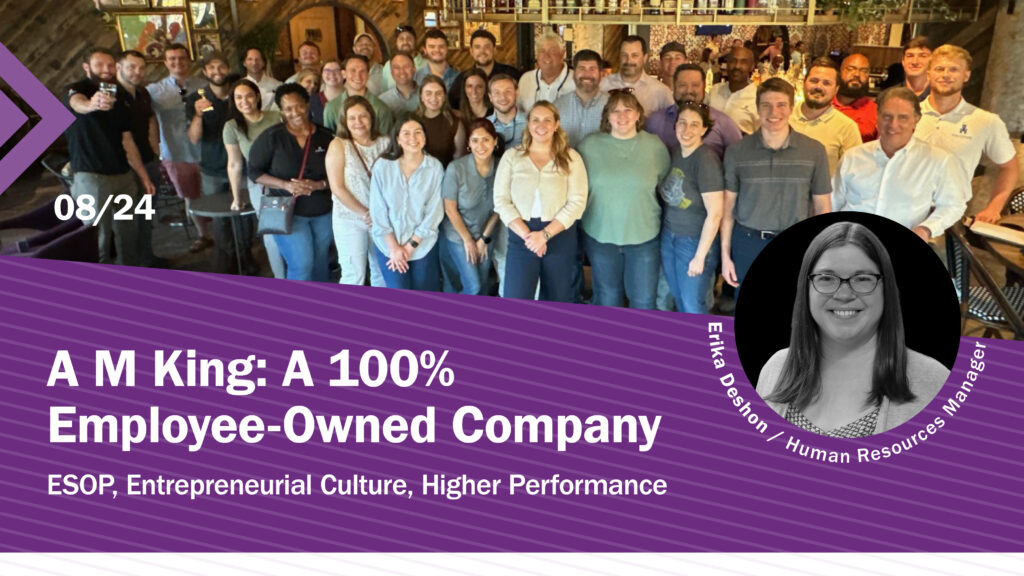
Six years ago, our founder and CEO, Brian King, transitioned A M King to a 100% employee-owned company by establishing an Employee Stock Ownership Plan (ESOP). While the ownership structure changed in a single transaction, the transformation among our people was happening even before it became official. Today there is growing evidence of our owner-mindset in the decisions we make and the accountability we bring to every project. It shows in how we show up for our clients.
To celebrate ESOP Month, we asked three employee-owners to share an “ownership moment” when their mindset influenced final project results.
Their stories span leadership, design and construction, all illustrating a central theme: ownership isn’t just something we have. It’s how we think, how we work and how we create better outcomes for our clients.
What is an Employee-Owner Mindset?
The deeply ingrained belief that employees are critical stakeholders who think, act, and make decisions like business owners. Because a legal ESOP structure does not automatically change behavior, this culture must be intentionally built through financial education and collective decision-making. Ultimately, it shifts perspective from just earning a paycheck to proactively sharing the accountability, initiative, and financial responsibilities of the entire company.
Leading with Long-Term Vision
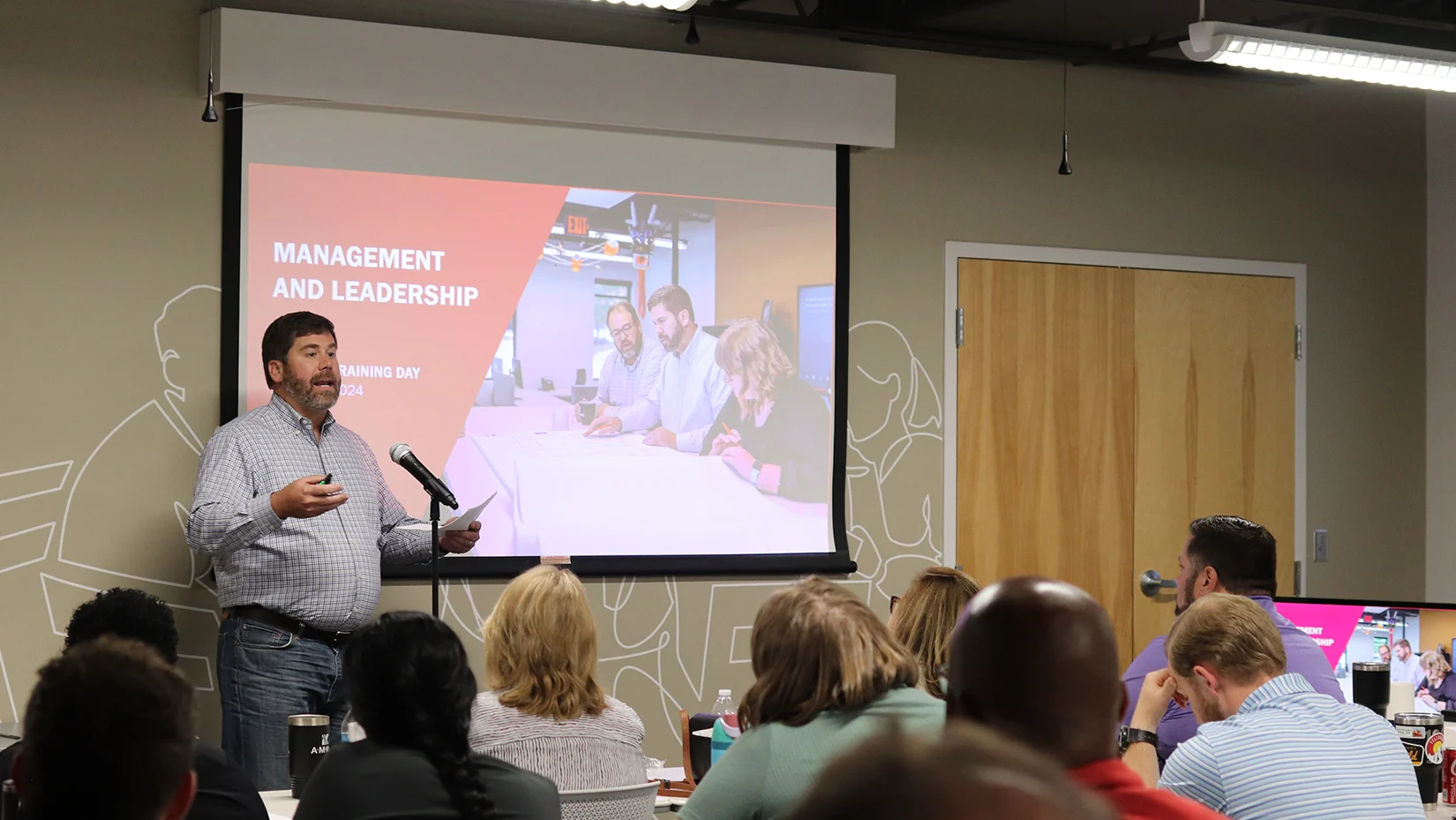
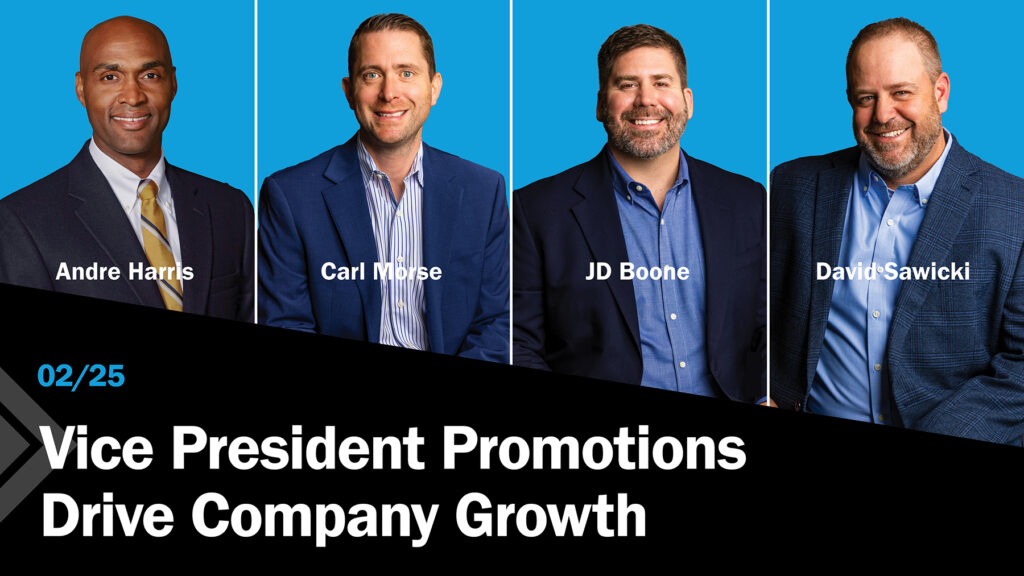
JD Boone | Vice President
As Vice President, JD Boone helps shape A M King’s strategic direction while mentoring the next generation of employee-owners. He understands that some of the most important decisions happen long before a project reaches the jobsite.
My role is a combination of project leadership, client relationships, people development, risk management, and business development. I have accountability for design, preconstruction, and operations within our business unit and ultimately for delivering successful projects.
The Challenge:
One recent challenge I took on was our approach to recruiting, as it’s not easy to find quality people who will fit in with our ownership culture.
The Ownership Moment:
Working with HR, we compared hiring and termination data and found that employees who came through referrals tended to stay longer than those hired through third parties. That led me to explore how we could better engage our own employees in recruiting.
I worked with HR, Marketing, senior leadership, and resources within the ESOP community to develop a referral program that better rewards employees for helping us find good people. Now that we’re part of an employee-owned company, we look at prospective employees a little differently. It’s not about identifying someone to perform a job well but rather discovering someone who can bring long-term value to our company as a fellow owner.
The Outcome:
The goal was to improve the quality and longevity of our hires while giving our employee-owners a greater role in building the company. Our clients benefit because design and construction is ultimately a people business. When our people feel personally invested in the outcome, clients see it in the quality of our work, how we communicate, and how we solve problems.
“Being an employee-owner changes the way I think about decisions. I find myself asking, ‘If this were my company, what decision would I make?’ I think beyond the immediate task. I consider the impact on our people, our clients, our financial performance, our reputation, and the long-term health of the company.”
Designing for Success
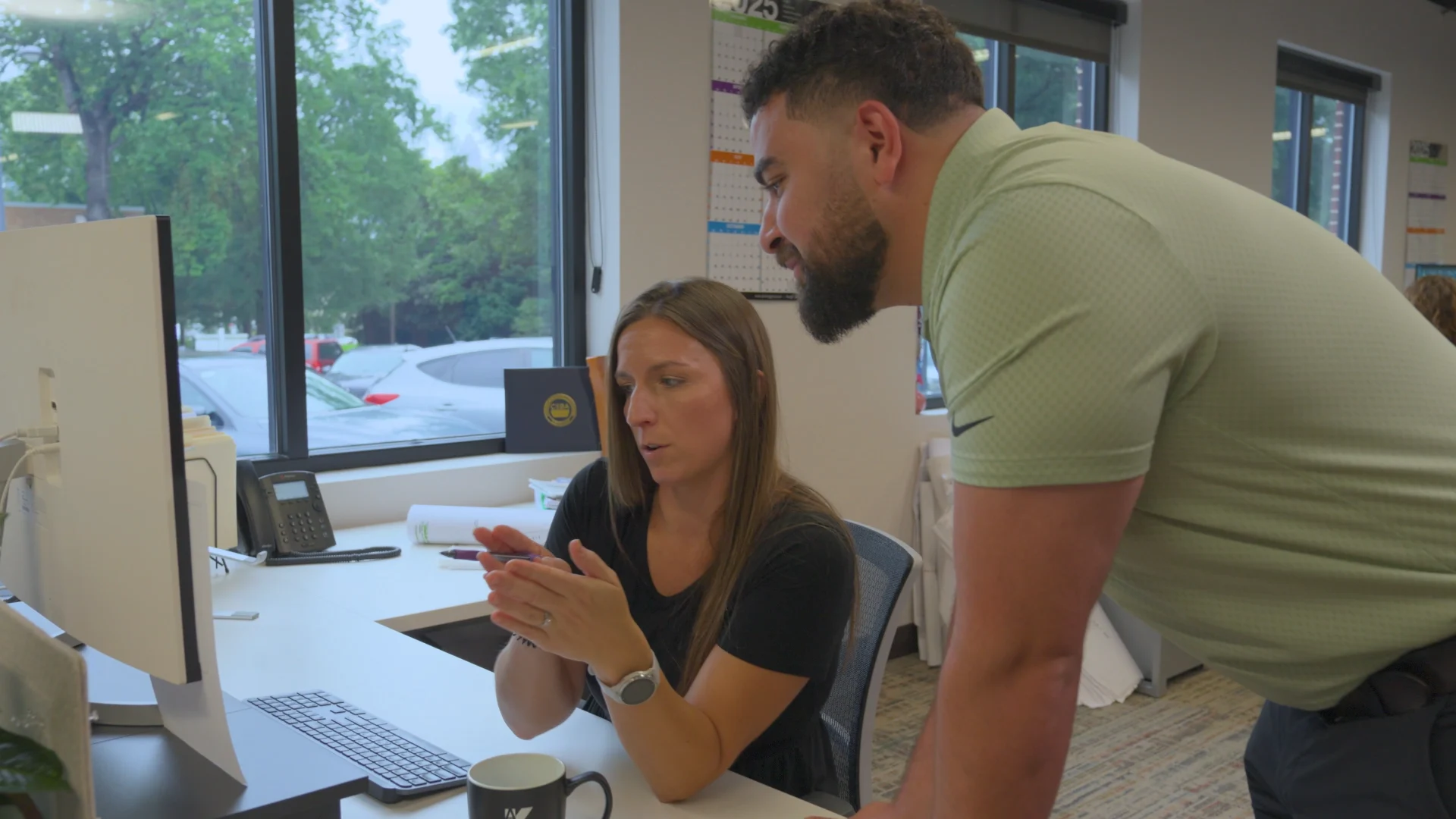
Jami Lamb | Design Leader
As Design Leader, Jami Lamb turns complex client requirements into innovative, buildable solutions. She works with both the customer and internal Operations and Preconstruction teams to coordinate project development from initial client interface through project completion.
I spend the majority of my time leading projects and project teams, including owners, operations, preconstruction, engineers, designers, and field teams. This includes project setup, budgeting, scheduling, timelines, planning, and programming. I coordinate project information between team members and serve as one of the main points of contact with the Owner and client team throughout the project.
The Challenge:
On a current food processing project, we have a small project site with significant constraints and restrictions. That made for a tight area to work within, both inside and outside the building. It required additional coordination between the engineers, field team, and Owner to make sure we could work around each other’s systems and minimize clashes.
The Ownership Moment:
The constraints on this particular job meant making some hard design decisions and getting more creative when our first preferred option wasn’t going to work — which I would do for any project. What I’ve recognized as an employee-owner is that I must first look at the bigger picture and how my relationship with the client could drive more innovation, fuel efficiencies, accelerate delivery and reduce costs. And that’s what we did here.
By putting my attention on the relationship piece and thoroughly understanding client goals and preferences, I already had answers to some of their questions. In many cases our team was able to address a problem before it became one.
The Outcome:
Before our company became an ESOP, I might have just focused on doing a good job on the project at hand. But now as an employee-owner I have a vested interest in ensuring that we have a happy client who comes back to us for their next project.
“Being part of an employee-owned Design-Build firm strengthens my drive to do my best and give clients the quality I would want to receive. For me, that means going beyond the design they ask for to give them something they didn’t even know they needed.”
Owning Every Detail
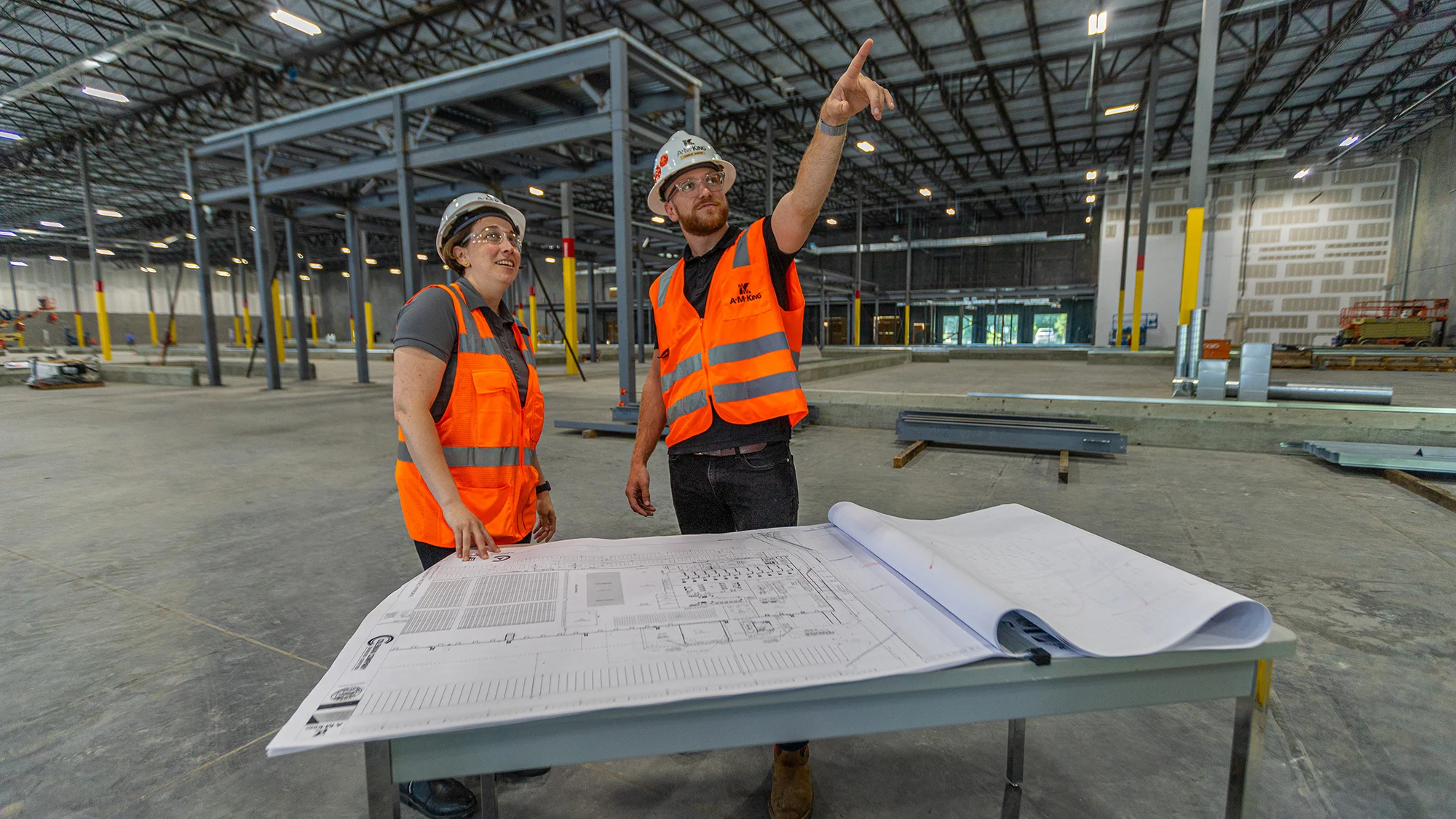
Charlie Martin | Project Manager
Project Manager Charlie Martin is responsible for keeping projects moving safely, efficiently and on schedule. He sees firsthand how small decisions made each day can have a lasting impact on project success.
My main responsibility is to oversee and manage the entirety of the construction project. This means I am responsible for schedule, budget, quality and client satisfaction throughout design, preconstruction, construction, and turnover.
The Challenge:
On a recent project in Georgia, one of our biggest challenges had to do with one of the subcontractors we hired. This was our first time using them, but they presented well during the bidding process, had a good industry reputation, and exceeded our prequalification standards. Nonetheless, initially they did not perform up to the standards we expected, and it became clear we would not make our schedule unless some changes were made.
The Ownership Moment:
We considered terminating the subcontractor, contacting their surety company, or subsidizing the remainder of their work. None of these were easy options, and they all would have taken time we didn’t have. I stepped back to consider this situation from not just a project manager’s perspective, but an employee-owner mindset. I knew there would be value in working collaboratively with this subcontractor to solve the issues, build trust and lay the foundation for a better future relationship.
Our employee-owner culture helped me stay level-headed, take responsibility, and not make the circumstances personal.
The Outcome:
By staying with the subcontractor and working through the situation, we were able to limit costs to our firm, get back on schedule, and, most importantly, meet the client’s move-in date. In the end, the project was a success, and we were also able to finish on good terms with a subcontractor we could depend on for future projects.
“My overall mindset has definitely been impacted by A M King becoming an ESOP. I have skin in the game now which really makes me appreciate and care more about every task I perform at the jobsite. When my project does well, the company does well.”
Conclusion
Together, these three stories demonstrate that an employee-owner mindset isn’t tied to one role or one type of project. It’s a responsibility that’s shared across our company. Whether solving challenges in the office, collaborating with clients, or leading work in the field, we are invested in delivering the best possible results.
During Employee Ownership Month, we’re proud to celebrate the people who bring that commitment to every project, every day.
FAQ: How Employee Ownership Benefits A M King’s Clients
Q: How does working with an employee-owned company impact our daily project execution?
A: Our ownership culture changes how daily decisions are made. Because our team has a direct financial stake in the outcome of your business, they don’t just execute tasks; they proactively look for project efficiencies, solve challenges independently, and innovate on your behalf from project concept to completion.
Q: How does an ESOP benefit the long-term stability and continuity of our client relationship?
A: One of the most significant client advantages is team consistency. Data compiled by the National Center for Employee Ownership (NCEO) shows that ESOP companies have voluntary employee turnover rates that are roughly one-third of the national average. For clients, this means escaping the frustration of constant team turnover and working with a deeply stable partner that retains your institutional knowledge year after year.
Q: Is there any consumer or market data proving that clients prefer employee-owned brands?
A: Yes. Research highlighted by The ESOP Association shows a clear market preference, indicating that 38% of customers actively prefer buying from employee-owned companies. This structural advantage means our company isn’t just focused on short-term profits for outside shareholders; our entire workforce works collaboratively to deliver high-quality outcomes for you.
Continue Exploring
Interested in learning more about A M King’s Design-Build approach or employee ownership? Check out these additional resources:
- Discover more insights from A M King.
- Read The ESOP Association’s ESOP Overview.
- Check out the NCEO’s Guide to Employee Ownership Month.