

Modern Manufacturing Facility Design: Innovations That Work
Manufacturing is changing fast — and manufacturing facility design has to evolve just as quickly. Today’s industrial and food processing companies aren’t just looking for square footage, they’re seeking spaces that align with stricter safety standards, tighter sustainability goals, and more efficient operations. That’s where intentional, modern manufacturing facility design comes in.
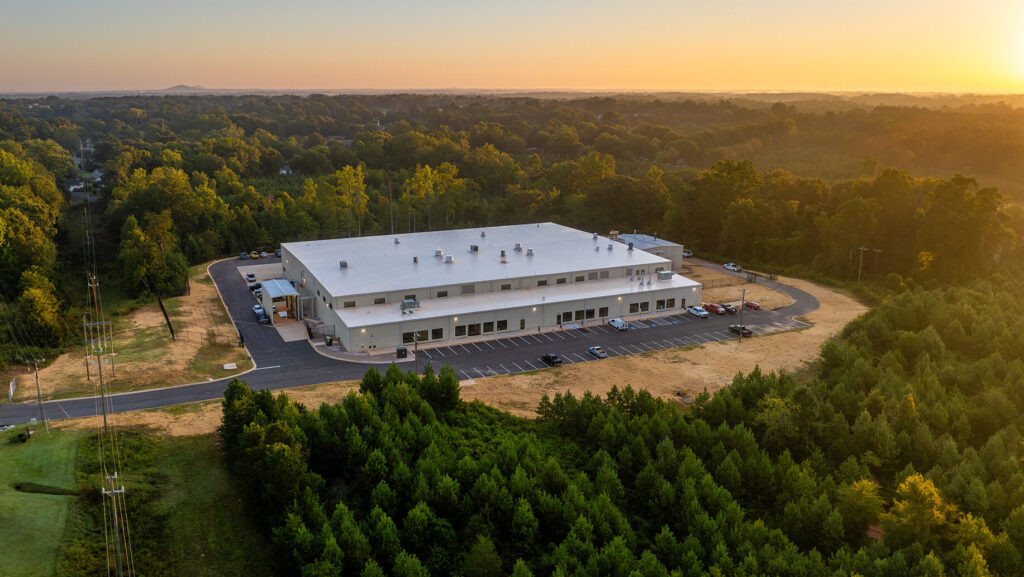
Our Design-Build team recently partnered with MÜNZING, a Germany-based specialty additives manufacturer, to deliver a production headquarters facility that meets these modern demands head-on. The result is a state-of-the-art building designed to improve performance, support growth, and raise the bar for what a manufacturing environment can be.
In this post, we’re breaking down five strategic design solutions that shaped the success of this project. These are buildable, code-compliant, future-proof features that food and industrial manufacturers across the U.S. should be thinking about right now.
Rethinking the Box: A Smarter Building Type

The MÜNZING project originated with plans to consolidate multi-state production operations and expand their food-grade and non-food-grade additives business. Our first step was to gather information about the company’s proprietary process so that we could then design and construct a building around that process.
Initially, thought was given for construction of a Pre-Engineered Metal Building (PEMB), a building type traditionally favored by manufacturers. However, PEMBs do not provide as much support for interior building elements, flexibility for future growth, or stringent hygienic design.
We considered concrete tilt-up construction but ultimately decided on development of a hybrid PEMB – wrapped like a PEMB but with a roof more like a steel-framed structure.
This innovative plan incorporated stronger joists versus traditional z-girt roof framing and supported the pipe bridge structure needed to transport nitrogen, compressed air and hot oil from the utility building to the main building. This cost-effective strategy allows MÜNZING to add processing pipes in the future.
Process Separation: A Core Principle in Manufacturing Facility Design
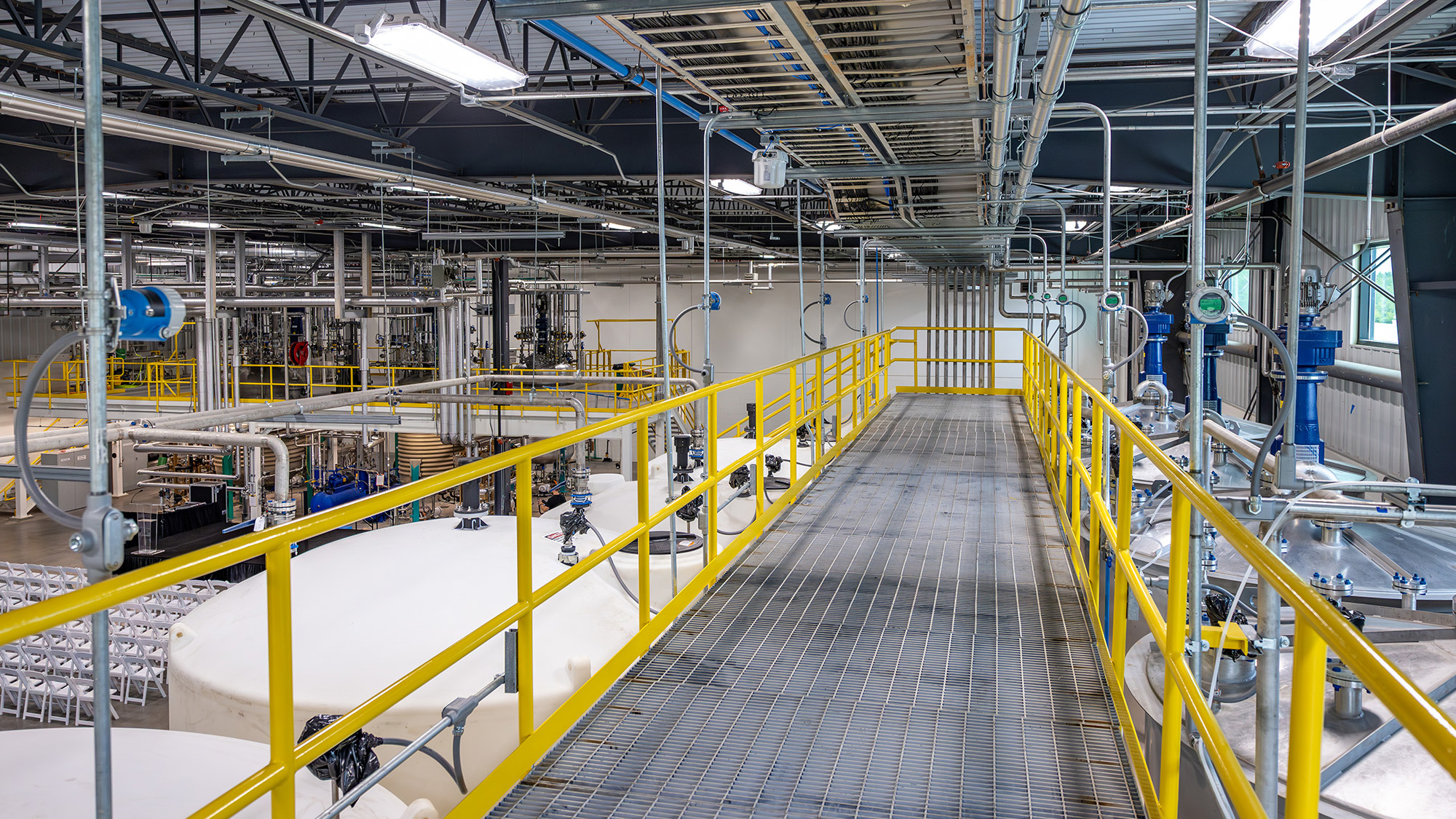
As part of A M King’s design process for food processing facilities, we create hygienic zones through physical separation. This strategy reduces risk of transferring hazards and allergens between different areas of the plant or process. Requirements for MÜNZING’s new facility were not only related to separation among different food-processing areas, but also separation between food and non-food processing spaces. We coordinated with the Owner through the design and construction process about how the facility could remain divided for control of employee and product flow.
Additional information we initially gathered related to room temperature, humidity, and air quality; water accumulation; sanitation; and design of MEP systems. Where the product is exposed, for example, there have to be different air pressures and temperatures to eliminate product contamination during each stage of its journey.
Not only did we work closely with the company to incorporate a strategic layout to isolate food from non-food operations, but also ensured that the facility met company, governmental and specialty hygiene requirements.
Design and Build for Compliance: Sanitary Certifications

Food contamination can be drastically reduced through superior sanitary design of the facilities and the process equipment. By applying hygienic design principles in the early stages of design, we can assist the Owner in maintaining a sanitary facility, eliminating unnecessary costs and boosting return on investment.
Many companies, find that GFSI (Global Food Safety Initiative) certification provides a structured framework for food safety that is recognized worldwide. MÜNZING, a global specialty additives manufacturer, advised the facility needed to meet all SQF building requirements, a certification overseen by GFSI.
SQF (Safe Quality Foods) is a set of standards that encompasses food safety, food quality, manufacture of food packaging, and storage and distribution of food. Having a GFSI-certification like SQF shows a deeper commitment to hygienic and risk aversion process design; minimizes the need for onsite audits; and inspires new business opportunities.
If our clients are interested in pursuing SQF for their facility, we have experience with these codes and have been able to integrate these design requirements into the construction documents. Our knowledge of food safety codes and requirements allows us to provide additional expertise and value for our clients’ projects.
Because MÜNZING had already expressed interest in utilizing a Pre-Engineered Metal Building (PEMB) for part of the structure, we coordinated with MÜNZING to ensure that facility met GFSI requirements for people/product flow. We studied the previously SQF-certified MÜNZING facility to confirm we could provide equal or better protection for the food processing area. Our design included smart choices for building components, sanitation practices and access control.
MÜNZING’s new S.C. facility — now the company’s main production facility in North America — is GFSI and SQF- certified, ensuring product safety in the production of their food-grade additives.
Sustainability in Modern Manufacturing Facility Design
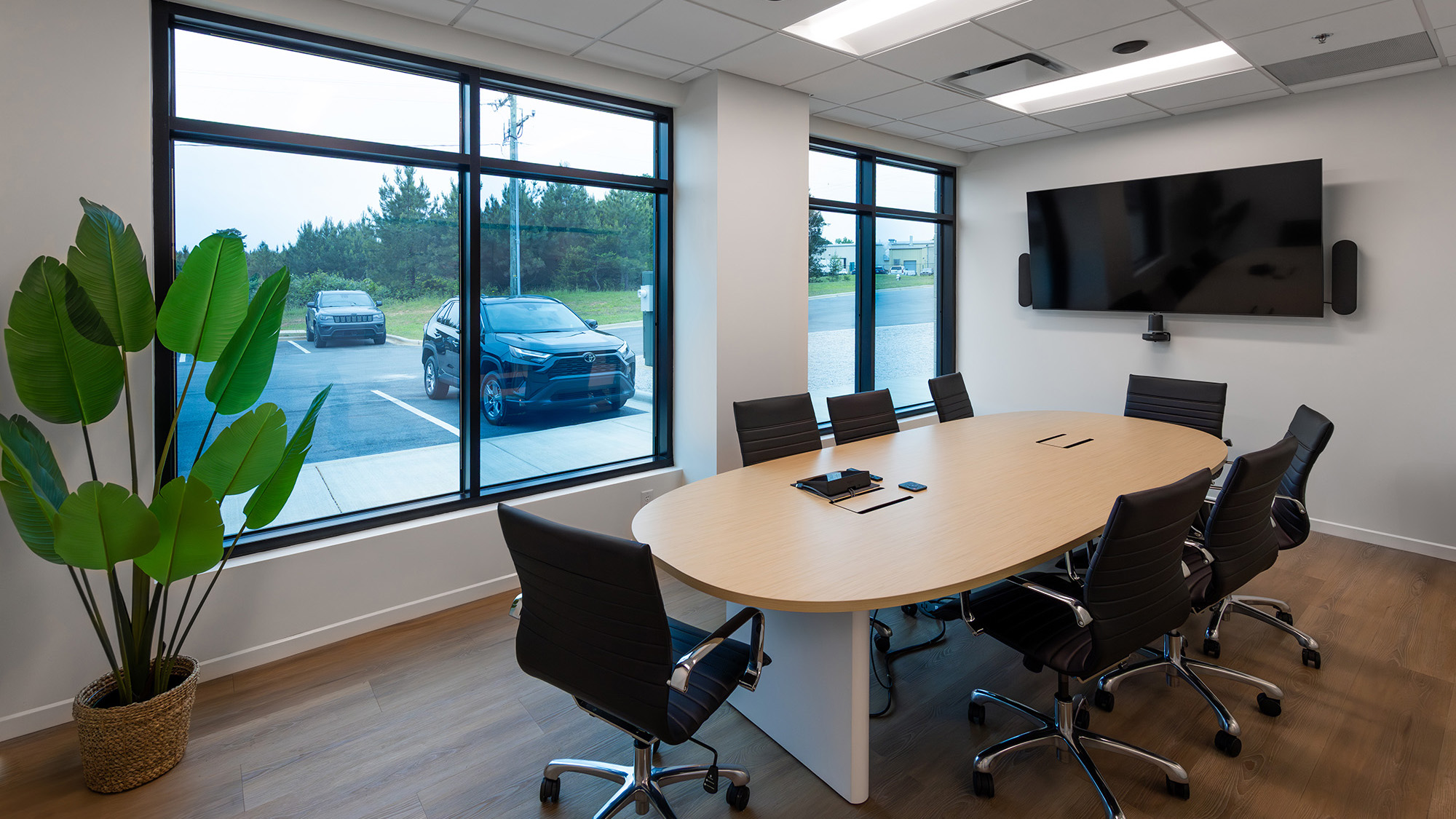
A M King not only designed and built a facility around MÜNZING’s proprietary processes but also created solutions to ensure a carbon-free environment.
After researching options, we used SageGlass, a Smart Glass glazing system that adjusts tint automatically to provide daylighting and thermal comfort for office occupants. We also prepared the facility for a full rooftop solar array, installed electric vehicle charging stations to service 8 vehicles, and provided infrastructure for 10 additional dual chargers and two single chargers – equaling 22 additional spots.
We also collaborated with MÜNZING to develop an advanced system for hydronic heating within the process and warehouse areas.
By using heat from industrial processes to supplement heat for the building, the company is reducing the load on the HVAC system, which is an innovative solution. There is a little bit of nuance required for calculating what you’re generating versus what you need to supplement. Most clients just want to heat and cool when they need it and exhaust out what they don’t need. MÜNZING said ‘Let’s capture and use what we can to minimize heat waste.’
A strong advocate of environmental sustainability, MÜNZING also reduces the environmental impact of adhesives by developing certified water- and biopolymer-based additives. The new production facility is sited on a 110-acre former tree farm, a choice that supports the company’s goal is to be carbon free by 2050.
Designing for Occupant Safety
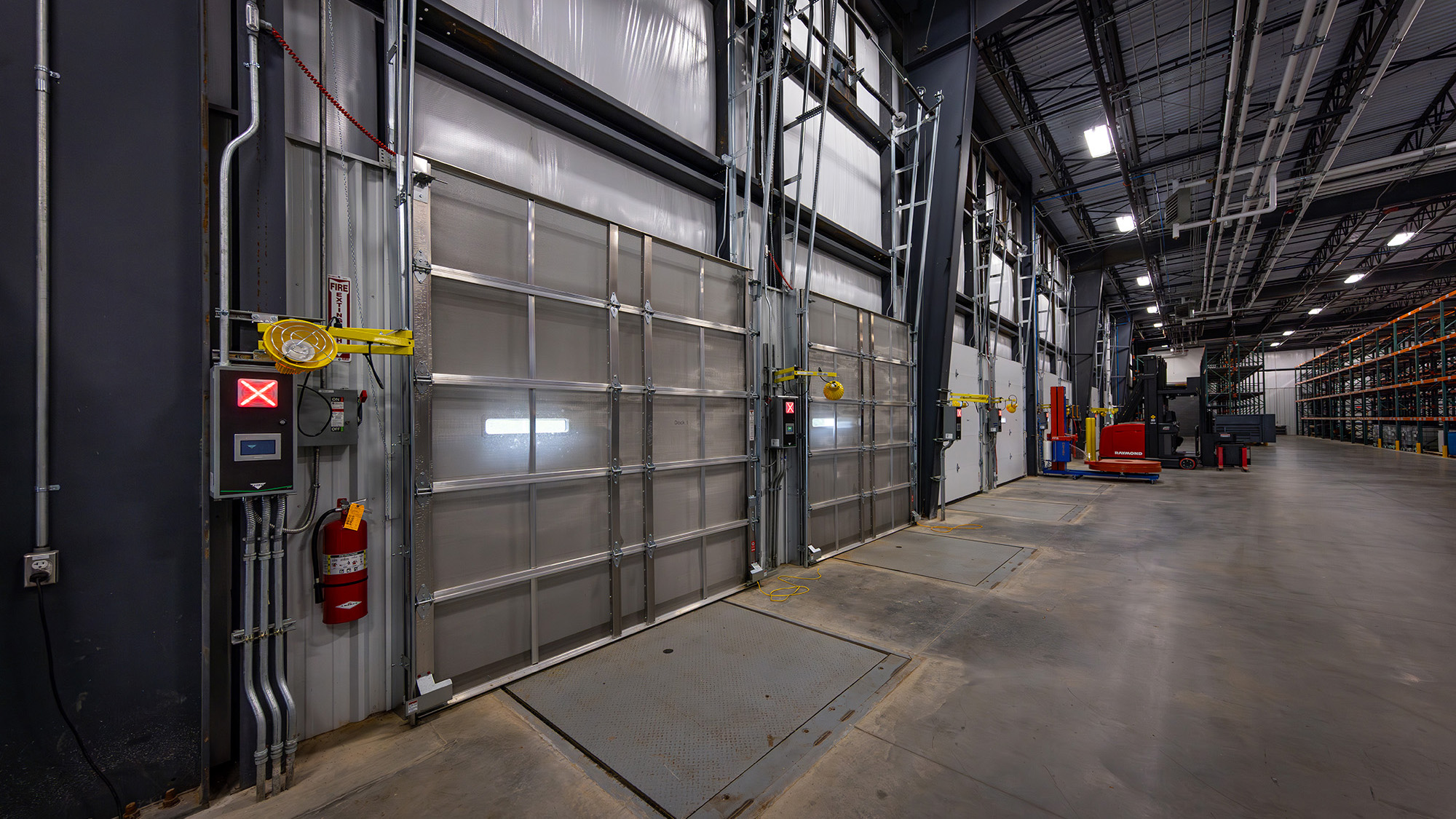
While fall protection was a major focus during construction, it was also a concern for the end user.
MÜNZING wanted the ability to open dock doors for additional ventilation, while also protecting food grade warehouse finished goods. To accomplish this, we specified fall protection screens at the dock doors that would prevent pest infiltration and alleviate potential fall hazards. Further, we installed grates at all pit and trench drain locations to prevent any fall hazards for facility occupants.
A M King designs site-specific features for occupant safety into all of our projects and this one was no different. Due to the nature of MÜNZING’s business — producing food-grade and non-food grade additives — there were classified areas of storage with flammable chemicals. We designed and installed drop-down safety gates that would restrict these areas in an emergency. Safety showers and eyewash stations were also incorporated around the facility for access in the event of a chemical spill.
Finally, we installed safety gates at the mezzanines, which allow forklifts to elevate product to the mezzanines and employees on the mezzanines to safely retrieve the product once it has been delivered. On the roof access ladder, we set up a safety gate and support bars for safe egress on and off the roof at the roof hatch.
Conclusion
Today’s manufacturing landscape demands more from your facility — more efficiency, more flexibility, more compliance, and more care for the people working inside. As this project for MÜNZING shows, modern manufacturing facility design isn’t just about walls and workflows — it’s a strategic tool for future growth.
Whether you’re upgrading an existing plant or building from the ground up, investing in the right design decisions now can save time, reduce risk, and position your operation for long-term success.